La persistencia de la memoria
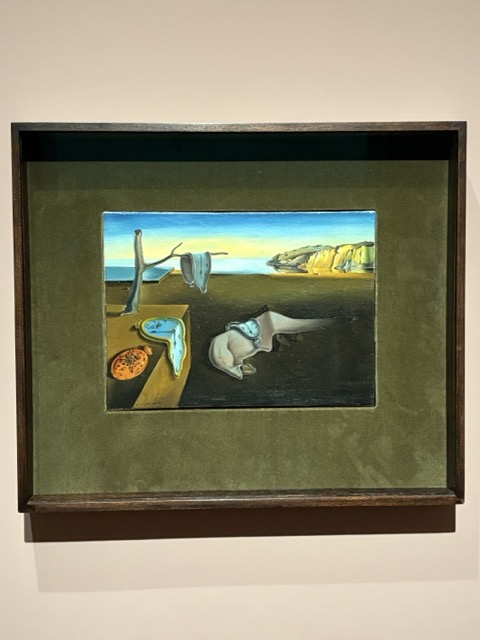
La persistencia de la memoria in english is "The Persistence of Memory".
The Persistence of Memory (La persistencia de la memoria) is an oil painting created in 1931 by the Spanish Surrealist artist Salvador Dali. It is considered one of the most iconic masterpieces of Surrealism worldwide.
The imagery of melting clocks became not only Dali's most recognizable symbol but also one of the most influential visual icons of 20th-century art. The painting is currently housed in the Museum of Modern Art (MoMA) in New York, where it has been part of the core collection since 1934.
The 1930s marked the height of Surrealism, a movement centered on dream imagery, the subconscious, and psychological landscapes. Influenced by Freudian ideas, Salvador Dali joined the Surrealist group in 1929 and quickly reached artistic maturity, leading to the creation of The Persistence of Memory.
During this period, Dali developed the paranoiac critical method a technique that merged irrational, dreamlike fantasies with highly realistic detail. This approach allowed unrelated objects to connect in unexpected ways, and The Persistence of Memory became one of the clearest examples of this method.
Dali said the melting clocks were inspired by "Camembert cheese melting on a hot afternoon." Combined with his fascination with time, memory, and the subconscious, this idea evolved into one of the most iconic masterpieces of modern art.
Medium: Oil on canvas
Dimensions: 24 x 33 cm (9.5 x 13 in).
The painting is much smaller than most people expect, yet it achieved enormous influence due to its powerful symbolism and surreal impact.
Dali used meticulous classical oil-painting techniques to depict fantastical imagery, creating what he described as "hand-painted dream photographs."
This combination of meticulous craft and fantastical imagery is central to his paranoiac-critical method.
The soft, melting watches symbolize the fluidity of time, showing that it becomes subjective and unstable in dreams. They challenge society's reliance on structured time and reflect Dali's interest in Einstein's theory of relativity.
The central amorphous shape is often seen as a distorted self-portrait and a symbol of the subconscious. It represents the drifting state between sleep and wakefulness and appears frequently in Dali's work as an expression of his inner psyche.
The ants crawling over a watch symbolize decay, anxiety, and the deterioration of time and material things. Their presence adds tension and a sense of unease to the otherwise still scene.
The calm coastline-based on Dali's home region in Catalonia-creates a stark contrast with the surreal foreground. This juxtaposition highlights the tension between reality and the subconscious world.
The Persistence of Memory catapulted Dali to international fame, establishing him as a leading Surrealist and securing his place in modern art history.
The melting clocks became a defining symbol of Surrealism and one of the most recognizable images in visual culture. They continue to appear across films, animation, advertising, and art education, making the painting a lasting icon in contemporary visual design.
1932: First exhibited in Paris
1934: Acquired by MoMA, New York
1934-present: Remains a core collection piece and one of the museum's most visited masterpieces
Due to its small size and immense popularity, the painting is often displayed in prominent locations within MoMA to maximize visibility.